01
Outcome before technology
We begin with the user, task, environment and decision to be improved—not with a predetermined platform or fashionable model.
AI and robotics solutions for organisations
CIRC combines technical architecture, learning design, applied research and implementation support. We help schools, universities, companies and international partners move from a broad ambition to a bounded use case, a credible pilot and an internal capability that can continue beyond the first project.

Outcome-led
Vendor-independent
Evidence-based
Capability transfer
Solutions engagement framework
Every solution begins with a bounded use case and explicit acceptance criteria. Timelines vary with integration, data, hardware, safety and deployment conditions.
| Service | Target group | Learning / project outcomes | Delivery model | Indicative duration | Collaboration |
|---|---|---|---|---|---|
| Readiness & Architecture | Schools, companies, laboratories and innovation teams | Use-case definition, system architecture, risk map, requirements and roadmap | Workshops, environment review, stakeholder interviews and technical design | 2–6 weeks | Discuss this service → |
| Prototype & Integration | Organisations with a defined AI or robotics task | Working proof of concept, integrated interfaces and initial performance evidence | Agile development, simulation, bench testing and design reviews | 6–16 weeks | Discuss this service → |
| Supervised Pilot & Verification | Teams preparing a system for controlled real-world use | Verification results, failure evidence, operator process and deployment decision | Controlled field trial, human oversight, safety testing and user feedback | 8–20 weeks | Discuss this service → |
| Deployment & Lifecycle Support | Institutions operating deployed AI or robotic systems | Operational capability, documentation, monitoring, maintenance and update governance | Training, handover, service reviews, incident process and iterative improvement | Initial mobilisation plus ongoing support | Discuss this service → |
01 / The CIRC advantage
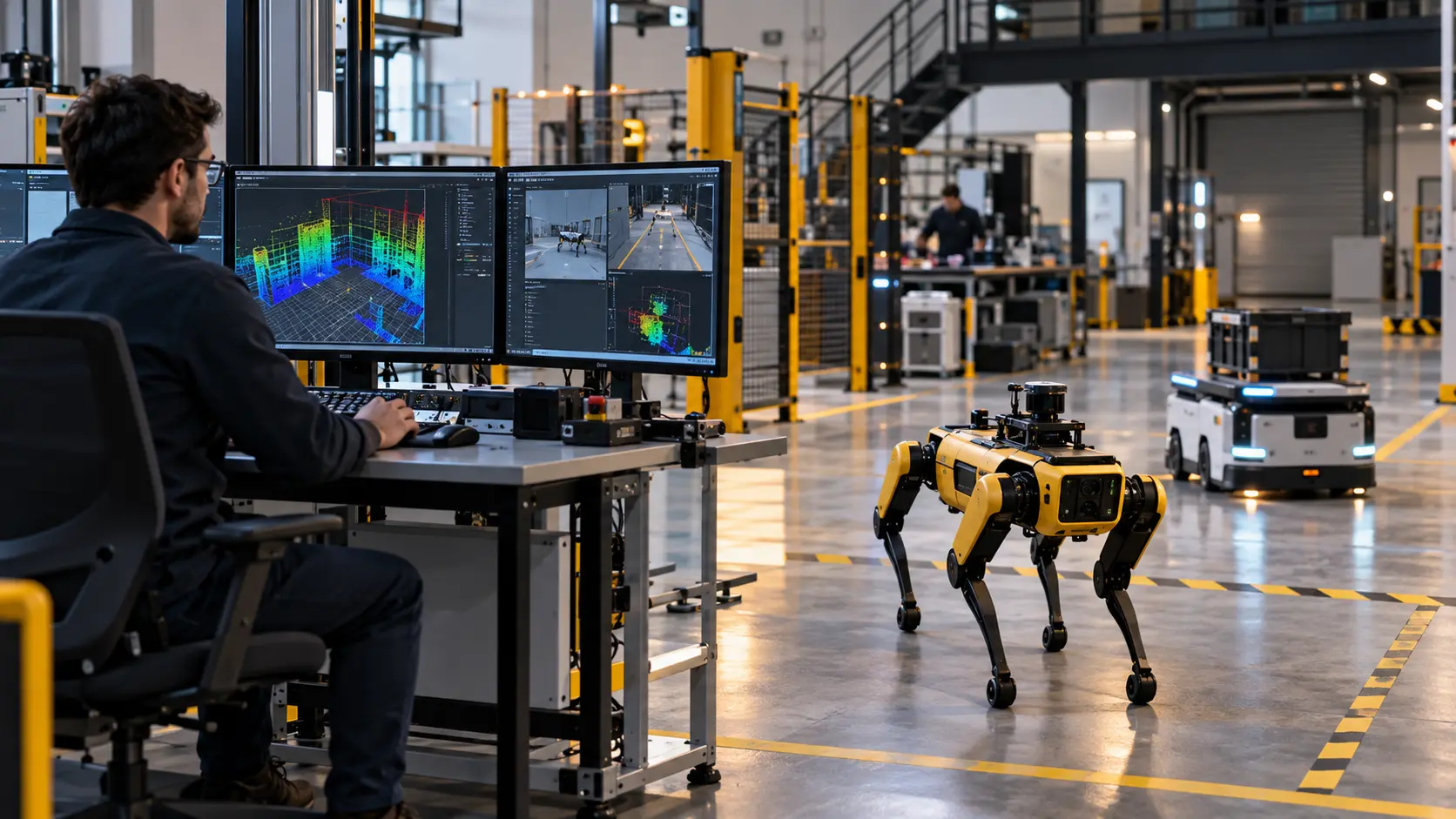
Many AI and robotics projects fail between a promising demonstration and day-to-day use. CIRC designs the technical system and the human conditions required to operate it responsibly.
01
We begin with the user, task, environment and decision to be improved—not with a predetermined platform or fashionable model.
02
Technical architecture is matched with training, workflows, documentation and role design so people can use and improve the solution.
03
Bounded pilots, explicit acceptance criteria and repeatable tests replace unsupported claims with evidence for the next investment decision.
04
Vendor-independent analysis and defined interfaces reduce unnecessary lock-in and keep future platform choices open.
02 / Who we support
CIRC adapts scope, governance and technical depth to the organisation’s purpose, existing capability and operating constraints.

Schools
AI strategy, robotics laboratories, curriculum integration, teacher capability, safe tool adoption and evidence for phased expansion.
Higher education
Reproducible robotics platforms, experimental environments, student project infrastructure and international applied-research programmes.
Industry
AI opportunity discovery, workflow prototypes, embodied-intelligence integration, verification and internal capability transfer.
International
Multi-institution pilots, bilingual coordination, shared standards, professional learning and cross-border programme delivery.
03 / Resource advantage
Our value comes not only from technical knowledge, but from the ability to connect technologies, learning environments, implementation partners and evidence across contexts.
01
Curriculum awareness, safeguarding, responsible technology use, evidence, teacher development and institutional implementation inform solution design.
02
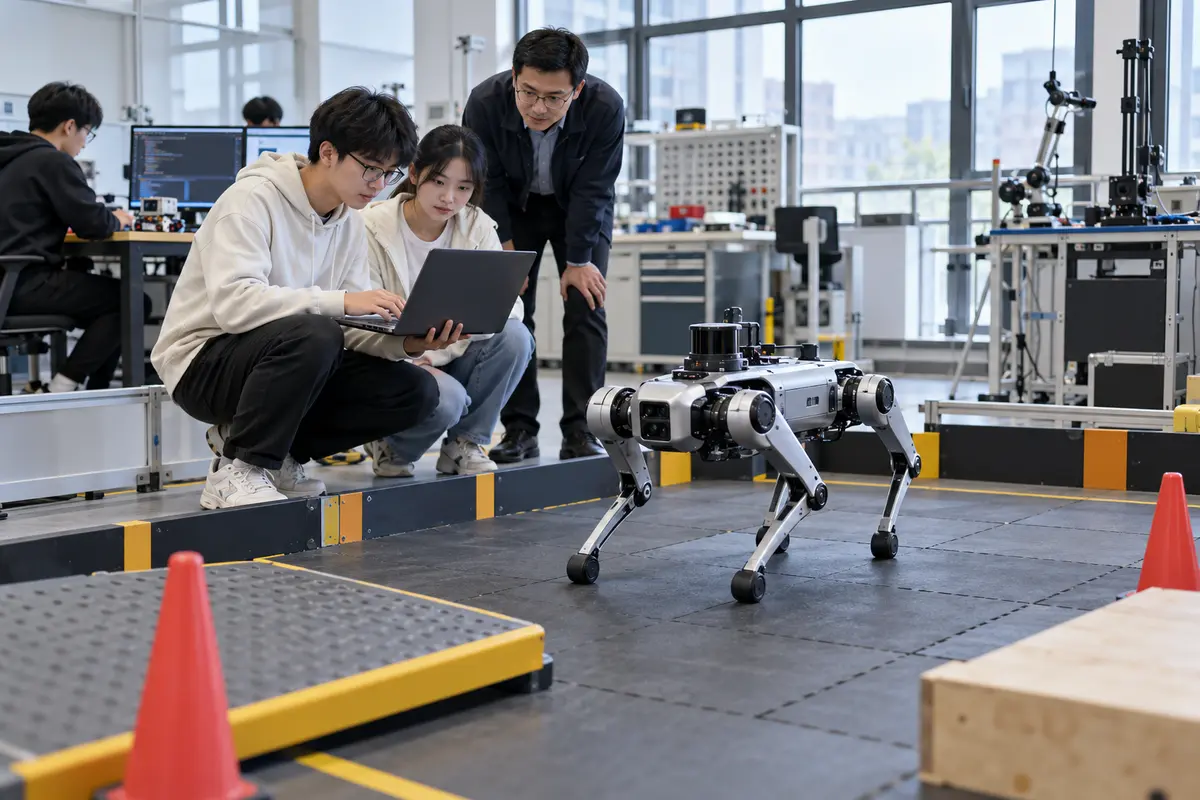
Experience in enterprise AI exploration, quadruped robot development, student application teams, school robotics and large-scale educator engagement grounds our work in delivery reality.
03
We can work across AI applications, computer vision, autonomous vehicles, drones, quadruped robots, simulation, ROS-based systems and cloud-to-edge workflows.
04
Shared terminology, translated documentation, clear interfaces and named responsibilities help international teams work as one programme.
04 / Solution portfolio

01
Identify high-value tasks, design human review, build a bounded application or automation prototype and establish responsible-use controls.
02
Integrate perception, task logic, control, operator interfaces and safety around a specific physical mission.
03
Combine space planning, hardware, curriculum, teacher preparation, assessment and support into a sustainable learning environment.
04
Create shared protocols, technical platforms, data boundaries and coordination models for multi-site projects and exchanges.
05 / How we work
Discover
Clarify users, workflows, desired outcomes, current systems, constraints, risks and the decision the project must inform.
Design
Define the minimum viable scope, interfaces, resources, governance, milestones, measures and team responsibilities.
Pilot
Test the most important technical and operational assumptions with representative users, scenarios and failure conditions.
Transfer
Provide documentation, training, operating guidance, review routines and a prioritised roadmap for sustained ownership.
06 / Client value
01
A prioritised view of opportunities, dependencies, risks, investment stages and measurable success criteria.
02
A bounded prototype, laboratory, workflow or integrated system that demonstrates the critical path under realistic conditions.
03
Leaders, educators, engineers or operators understand the system, their responsibilities and how to continue improvement.
04
Documented tests, user feedback, limitations and implementation learning support an informed decision to stop, revise or scale.
07 / Delivery pathway
Gate 1
Confirm the problem, client owner, users, environment, baseline, constraints and measurable outcome before solution design begins.
Gate 2
Agree the architecture and prove the highest-risk technical or operational assumption before wider integration.
Gate 3
Evaluate performance, usability, safety, failure handling, workload and organisational fit under controlled conditions.
Gate 4
Transfer knowledge and evidence, confirm ownership and decide whether to stop, revise, repeat or scale.
Your next step
Describe the users, environment, task and constraints. CIRC will identify the right discovery, prototype or validation starting point.