01
Humanoid Robot Motion Control
Develop the mechanics, control and engineering understanding needed to model, stabilise and command humanoid movement.

Modular AI and robotics learning
This modular architecture is independently written from the subject categories and example courses shown in Shenlan Academy’s current course catalogue. CIRC can use the framework to shape school, university, professional-learning and laboratory programmes; it does not reproduce the original course materials or claim ownership of Shenlan Academy’s courses.
Foundation to advanced
Theory and practice
Modular delivery
Portfolio evidence
Module 01 / Embodied Intelligence and Robotics
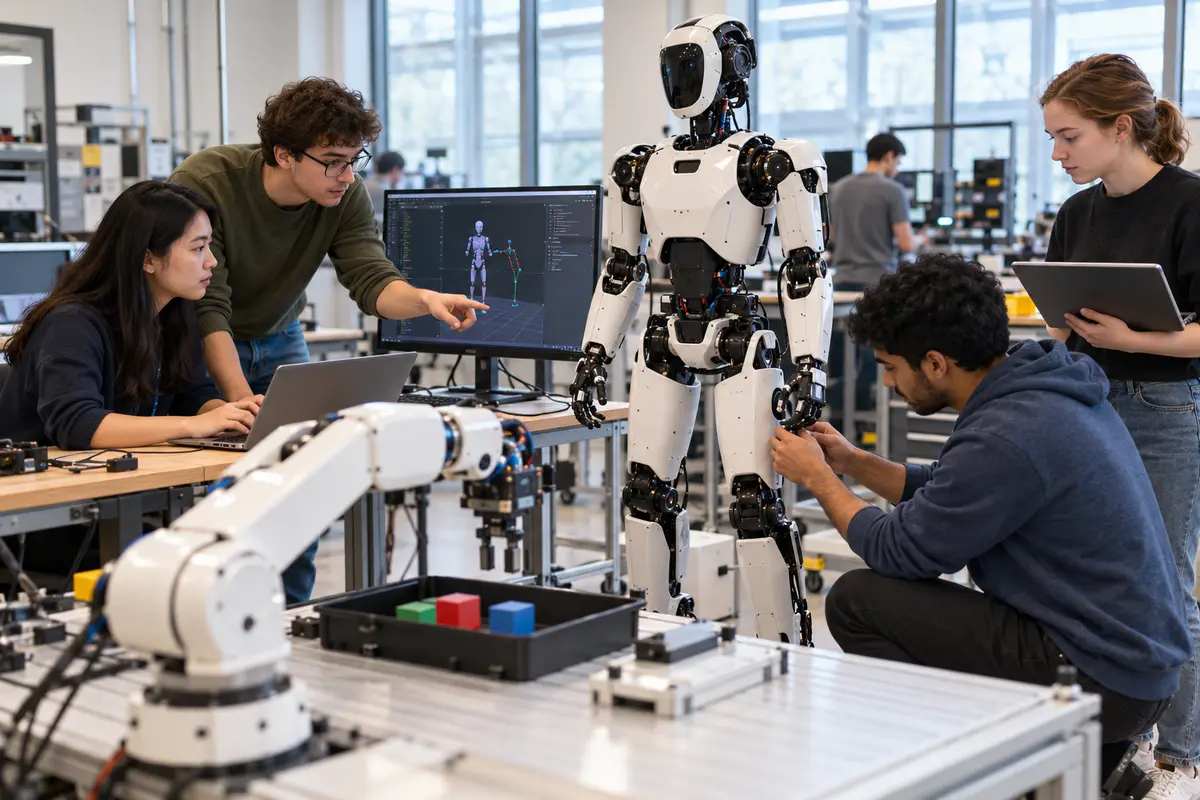
A progressive product family covering humanoid motion, manipulation, grasping, perception–decision–control integration and vision–language–action systems.
01
Develop the mechanics, control and engineering understanding needed to model, stabilise and command humanoid movement.
02
Compare classical planning and perception pipelines with end-to-end methods through structured manipulation projects.
03
Explore supervised fine-tuning, deployment and strategy improvement for vision–language–action systems in a controlled laboratory context.
Module 02 / Quadruped Robotics
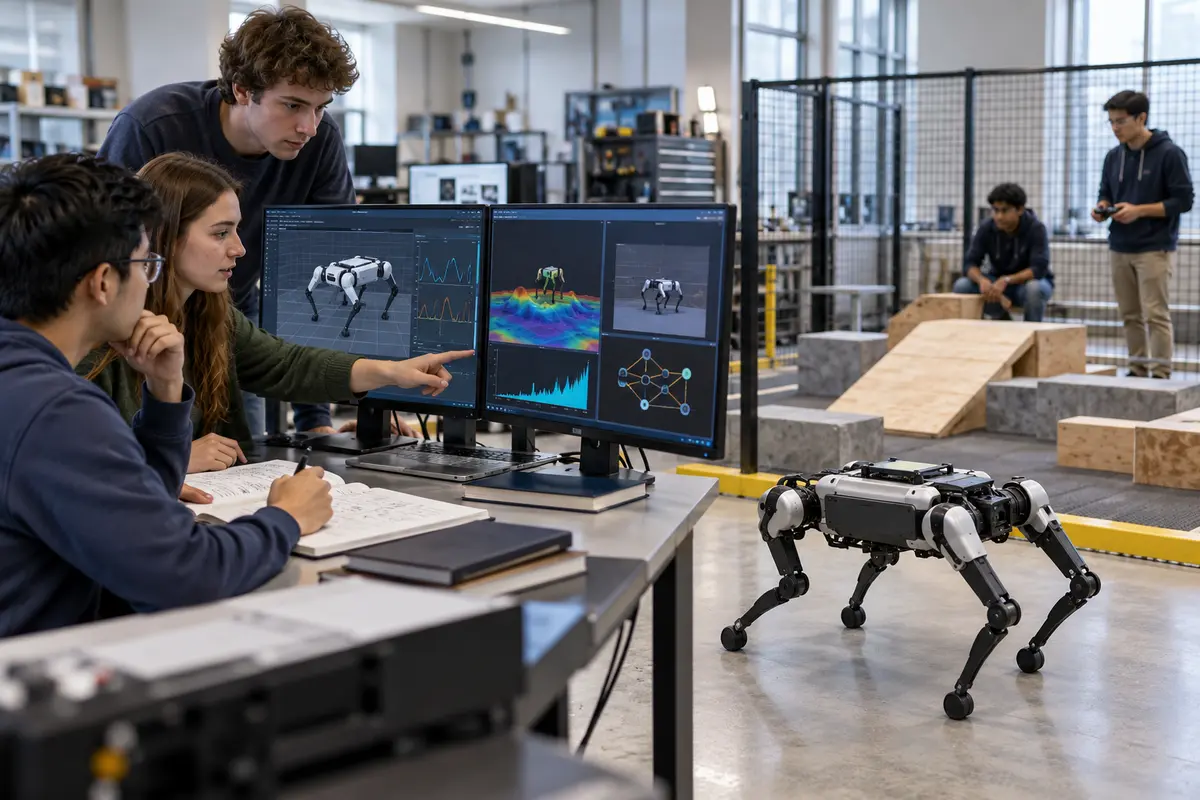
A specialist pathway linking physical modelling, control, simulation, reinforcement learning and careful real-platform validation.
01
Build understanding of forces, contact, gait, stability and the physical assumptions underlying quadruped motion.
02
Create repeatable simulation experiments, define reward and observation structures and compare learning behaviour.
03
Move from simulation to supervised physical trials while documenting parameter sensitivity, failure and safety controls.
Module 03 / Large Models and Agents
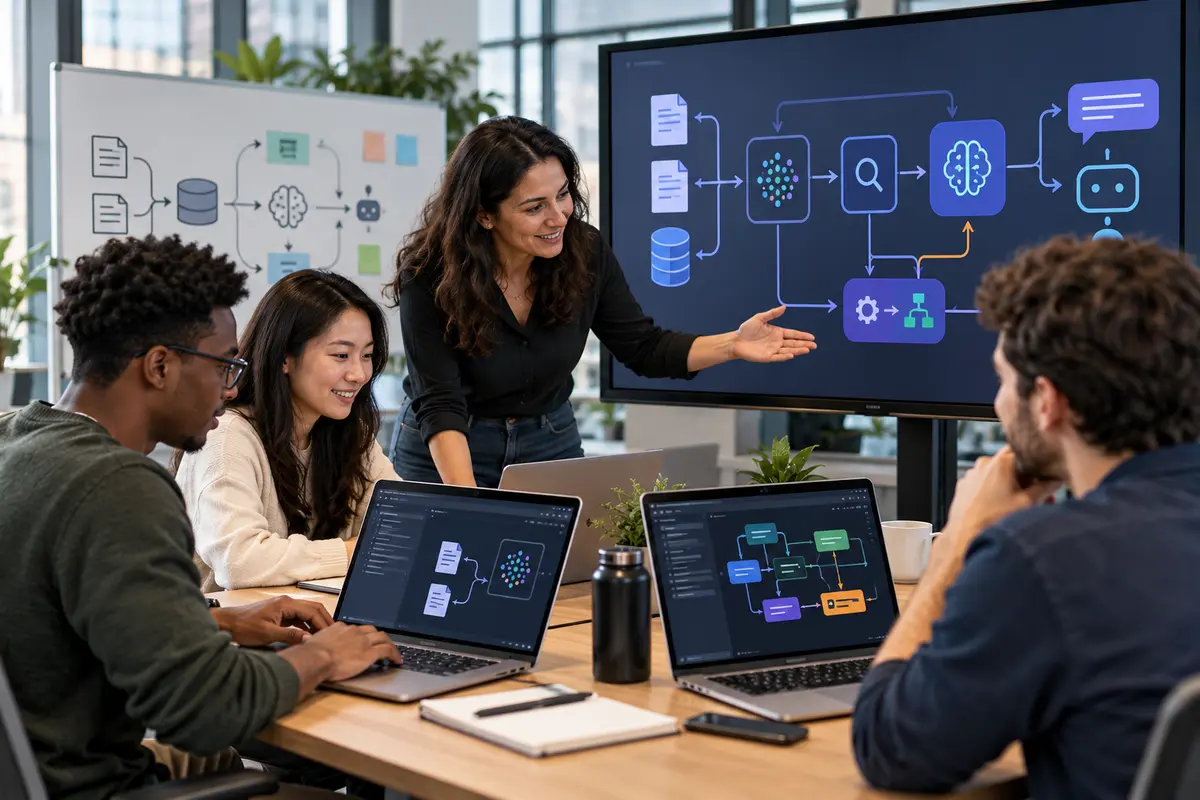
A software product line moving from model foundations to retrieval systems, tool-using agents and modern AI-assisted development workflows.
01
Study attention and Transformer architecture through theory, implementation exercises and a small-model development pathway.
02
Design retrieval, grounding, evaluation and tool-use workflows for chat, knowledge and task-oriented applications.
03
Progress from prompting and AI-assisted coding towards specification-driven development, testing and reproducible software workflows.
Module 04 / Autonomous Driving and Vision
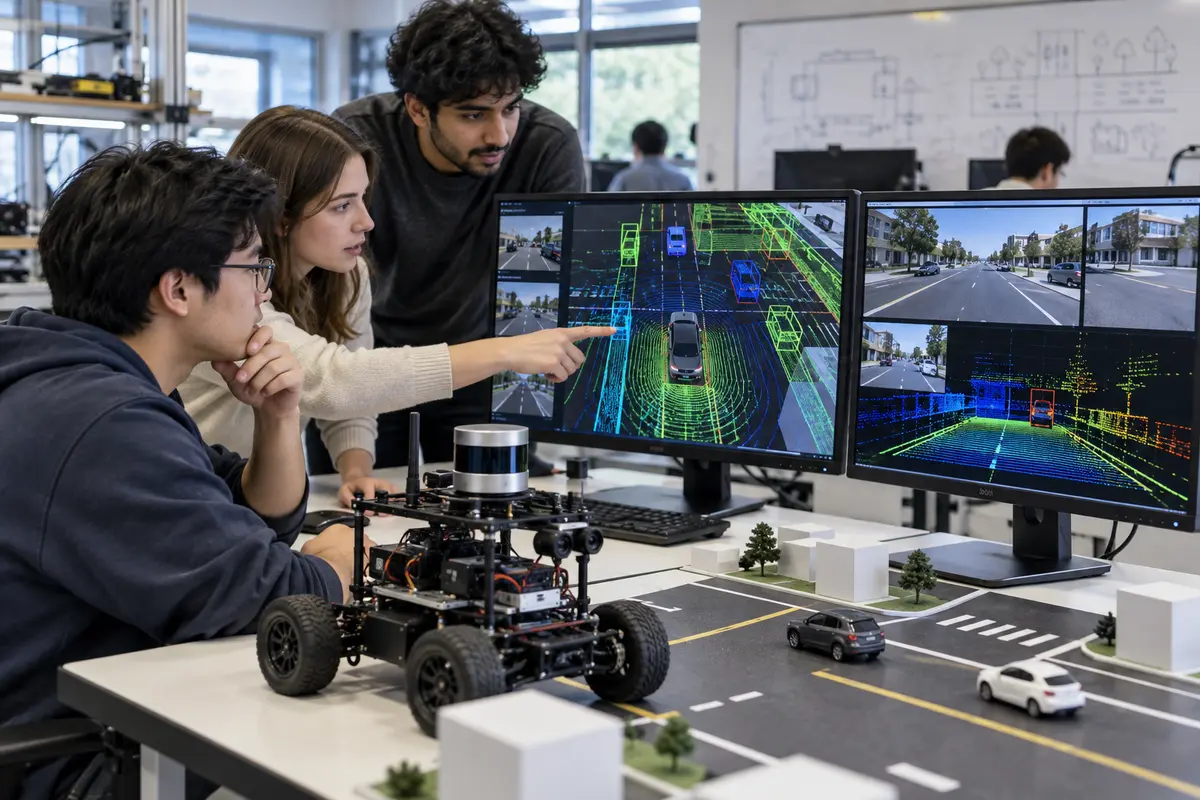
A perception-focused product line combining computer vision, multi-sensor reasoning and the engineering context of autonomous systems.
01
Develop image-processing, representation, detection, segmentation and evaluation knowledge through practical experiments.
02
Examine bird’s-eye-view perception concepts, representative algorithm families, data flows and implementation choices.
03
Connect perception outputs to localisation, planning, simulation and safety-aware system evaluation.
Module 05 / Artificial Intelligence Foundations
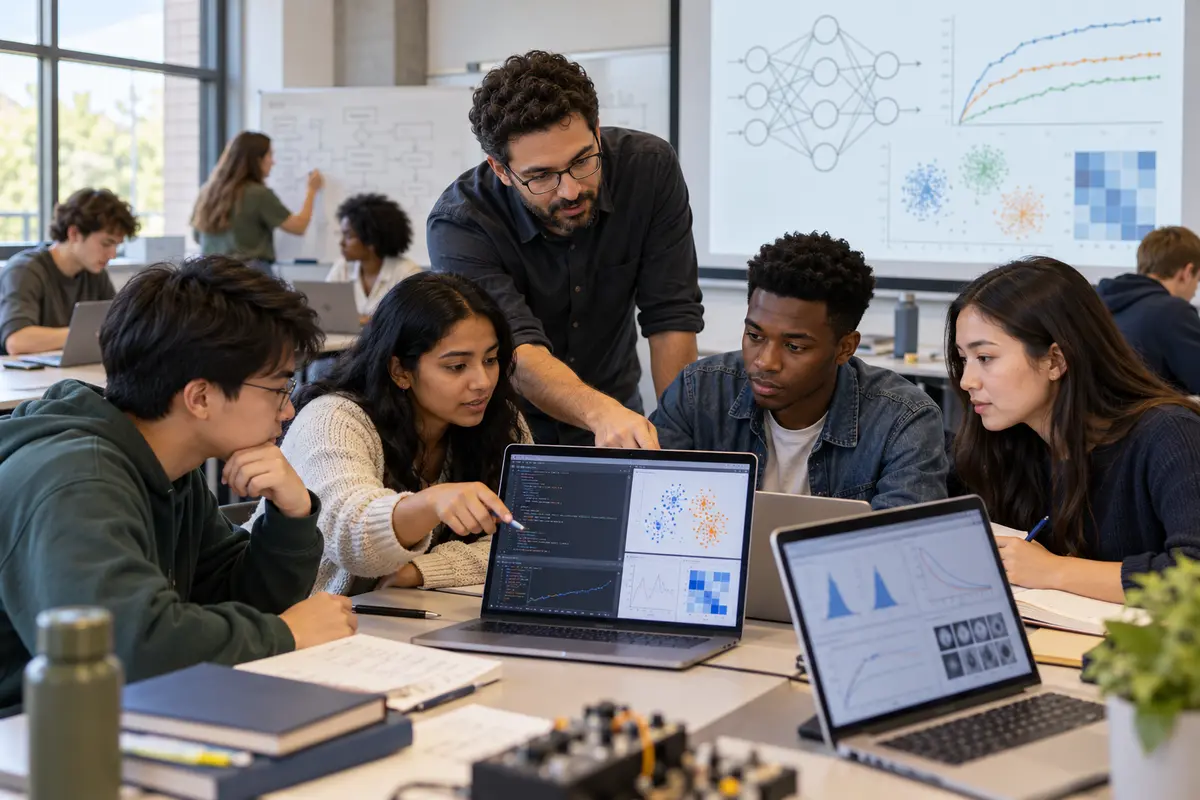
A foundation-to-advanced pathway across artificial intelligence, machine learning, natural language processing, intelligent speech and model deployment.
01
Data preparation, supervised and unsupervised approaches, experimental design, metrics, generalisation and responsible interpretation.
02
Language and speech representation, sequence models, recognition, generation, evaluation and human-centred application.
03
Efficiency, quantisation, distillation, runtime constraints, hardware awareness and validation after deployment.
Module 06 / Mathematics and Engineering
Supporting products that give learners the mathematical, programming and systems knowledge required for dependable AI and robotics work.
01
Move from syntax to memory, abstraction, debugging and software design practices used in robotics and high-performance AI systems.
02
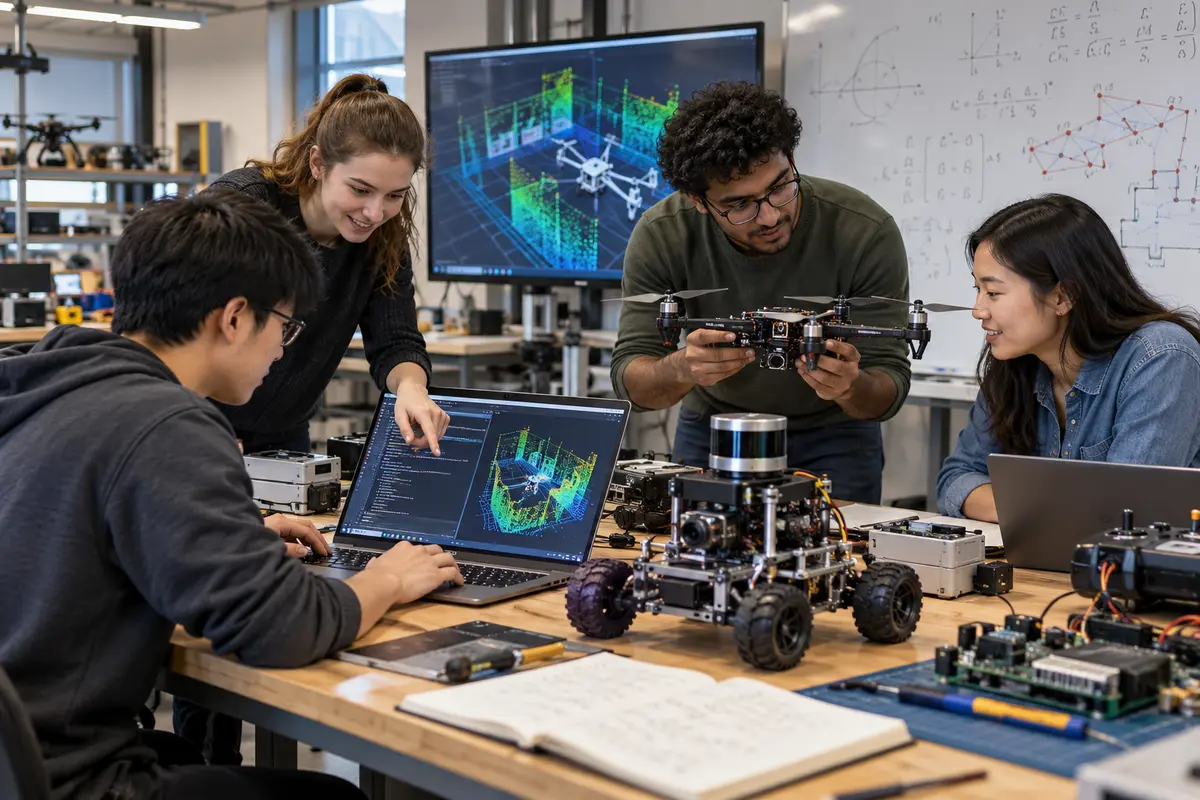
Study sensing, mapping, localisation, estimation, optimisation and evaluation through simulation and robotics exercises.
03
Develop supporting knowledge in flight systems, imaging pipelines, geometry, linear algebra, probability and optimisation.
Delivery architecture
Foundation
Structured lessons, notebooks or simulation introduce the underlying ideas and establish common technical language.
Progression
Learners integrate code, data and hardware through bounded tasks with milestones and repeatable tests.
Advanced
Teams investigate a specialised system, evaluate limitations and produce a technical portfolio or demonstrator.
Capability
Planning, equipment setup, teaching guidance, assessment and troubleshooting resources enable sustainable delivery.
Build the next programme
We can shape a class project, school pilot, international team or multi-school pathway around your learners.