01
Authentic theme
The brief is connected to a human, environmental or community need and avoids presenting technology as an automatic solution.

International AI & robotics challenges
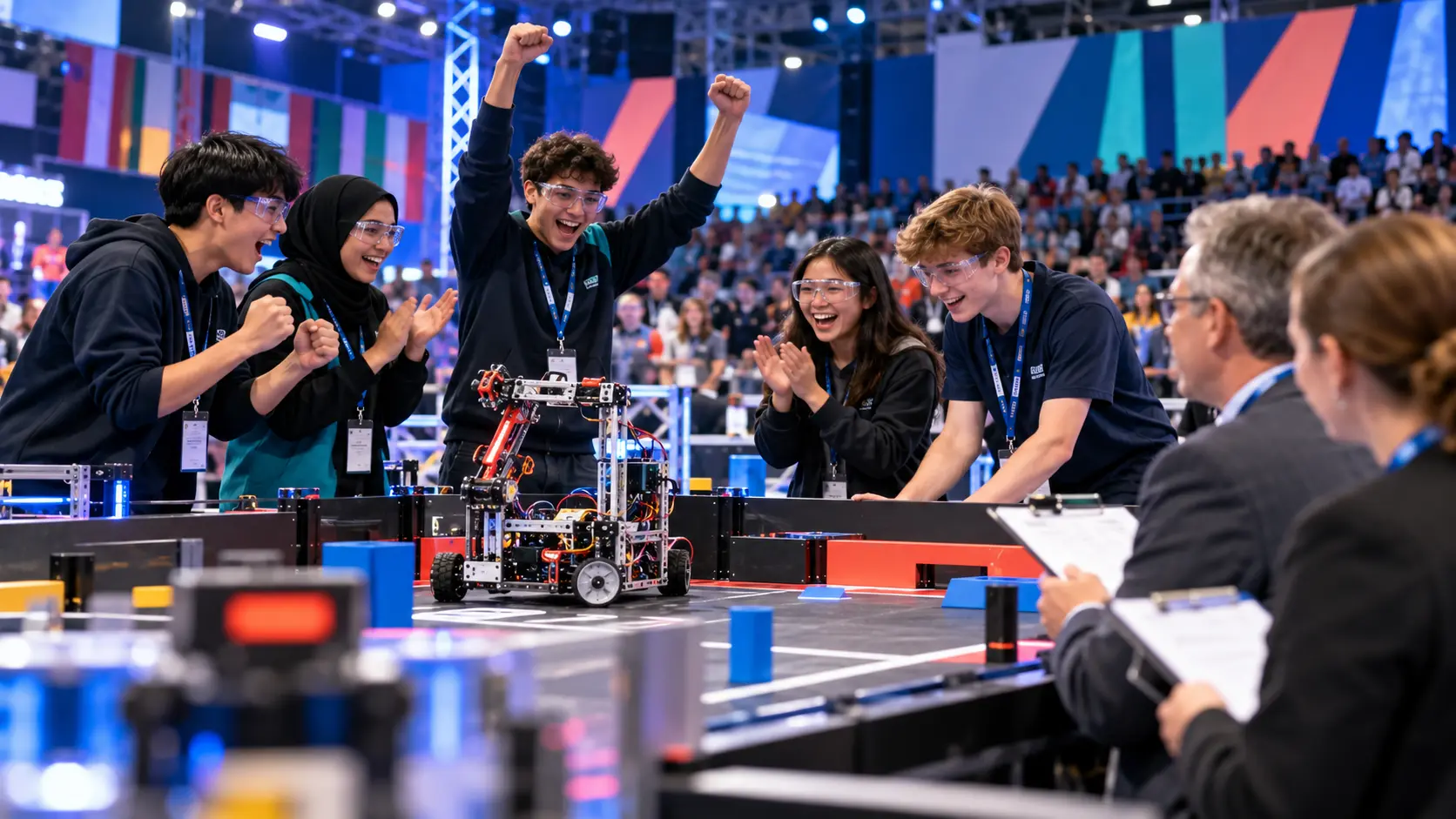
CIRC Global Challenges bring schools and student teams together around AI, robotics and responsible innovation. Each challenge combines a real-world theme, a common technical brief, local investigation, milestone reviews and an international showcase. Programmes can be non-competitive, judged or delivered in progressive regional and global stages.
Common challenge briefs
Multiple entry levels
Evidence-based judging
International showcase
01 / Challenge design
01
The brief is connected to a human, environmental or community need and avoids presenting technology as an automatic solution.
02
Core objectives, constraints, evidence and safety rules allow fair review while leaving room for local creativity.
03
Simulation, low-cost hardware and advanced engineering divisions enable participation across different resources and experience.
04
Judging recognises research, iteration, responsible decisions and teamwork as well as final performance.
02 / Challenge theme
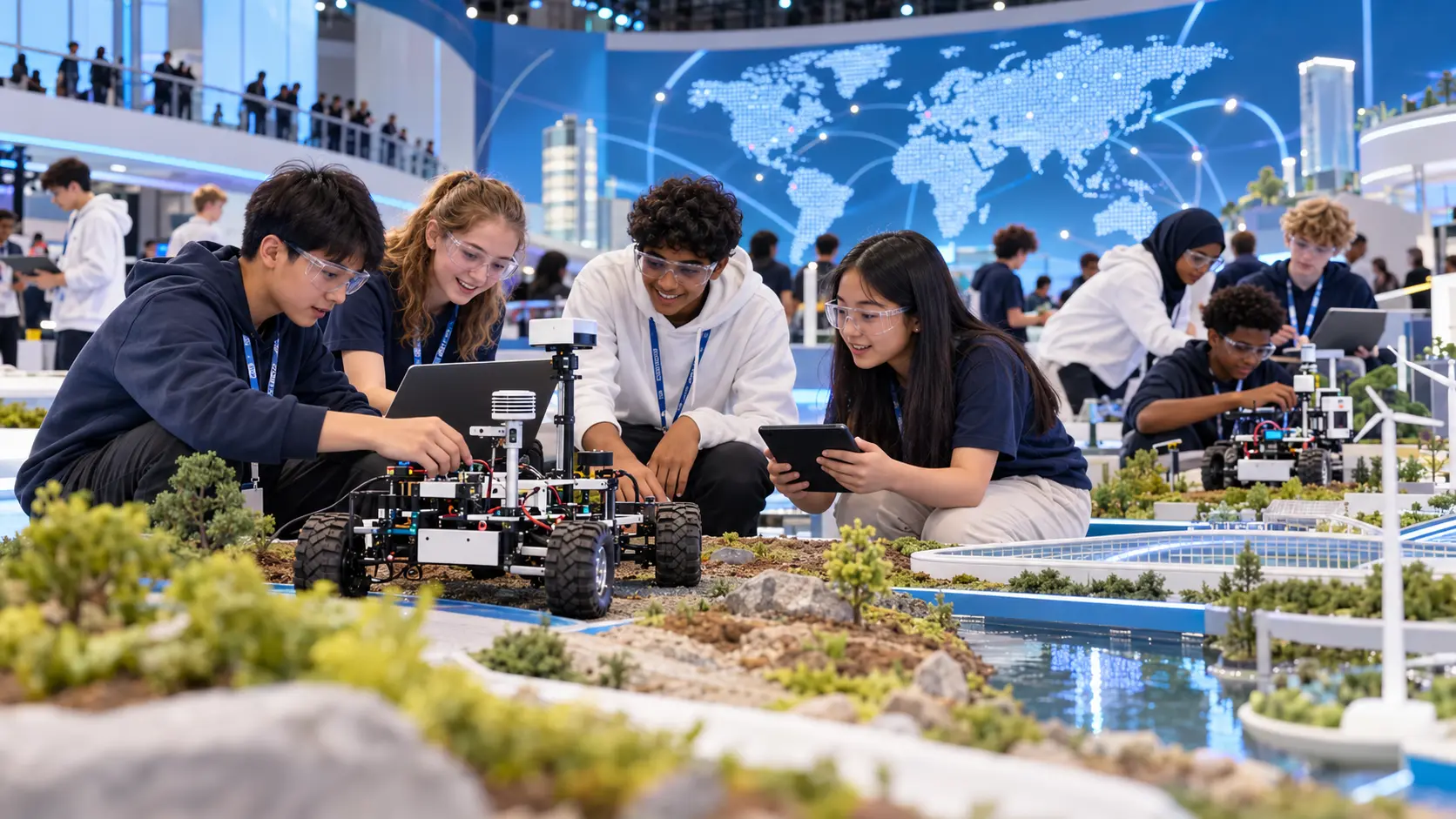
Teams design an intelligent system that helps a school understand or respond to heat, air quality, energy, water, biodiversity or another locally relevant climate issue.
Research
Teams define a measurable school problem, collect permitted data and distinguish observation from assumption.
Solution
Projects may combine sensors, data analysis, prediction, dashboards or robotic intervention at an appropriate level.
Test
Students compare a baseline and prototype result, explain uncertainty and consider cost, maintenance and unintended effects.
Showcase
Participating schools contribute a concise local case so audiences can compare context, methods and design choices.
03 / Challenge theme
Students develop robots or simulations for a controlled search-and-support mission. The challenge rewards safe, reliable behaviour and clear technical evidence rather than speed alone.
01
Navigate a mapped or partially known zone, identify targets, deliver a lightweight item or transmit useful information.
02
Teams work within specified size, energy, communication, autonomy and safety limits.
03
Changed routes, sensor uncertainty or connection loss test whether systems stop, recover or request human assistance appropriately.
04
Architecture, code, test logs, risk controls and operator procedures form part of the judged evidence.
04 / Challenge theme
Teams create a digital or robotic prototype that improves access to information, services, movement or participation for a clearly defined community scenario.
01
Teams demonstrate how user needs were researched and avoid making unsupported assumptions about disability or disadvantage.
02
Interface, language, interaction and physical design are evaluated against relevant user tasks and accessibility principles.
03
Projects minimise sensitive information, explain consent and maintain meaningful human choice.
04
Students consider affordability, availability, maintenance and who might still be excluded by the proposed system.
05 / Challenge theme
Students investigate how sensing, data and automation might support resilient food systems while considering biological, environmental and economic constraints.
01
Projects begin with a crop, growing environment, supply issue or food-waste challenge relevant to the team’s region.
02
Possible solutions include monitoring, image classification, controlled irrigation, robotic inspection or decision-support dashboards.
03
Teams validate measurements or model outputs and explain where expert agricultural judgement remains necessary.
04
Water, energy, materials, cost and labour implications are considered alongside technical performance.
06 / Participation pathway
Stage 1
Schools receive the brief, eligibility, safeguarding requirements, technical rules, assessment rubric and teacher orientation.
Stage 2
Teams submit a problem statement, initial evidence, proposed architecture, risk considerations and project plan.
Stage 3
Milestone reviews examine progress, testing, documentation and responsible design without completing the work for students.
Stage 4
Finalists present the system, respond to technical questions and reflect on limitations, iteration and next steps.
07 / Entry levels
Foundation
Teams use visual coding, digital models or supplied datasets to demonstrate logic, research and responsible decision-making.
Development
Students combine code, electronics, sensors or an application into a working solution tested against common criteria.
Advanced
Teams use more complex models, robotics or original data and provide deeper evaluation and verification.
Open
A flexible division recognises solutions shaped by distinctive regional needs while maintaining core evidence and safety standards.
08 / Judging framework
01
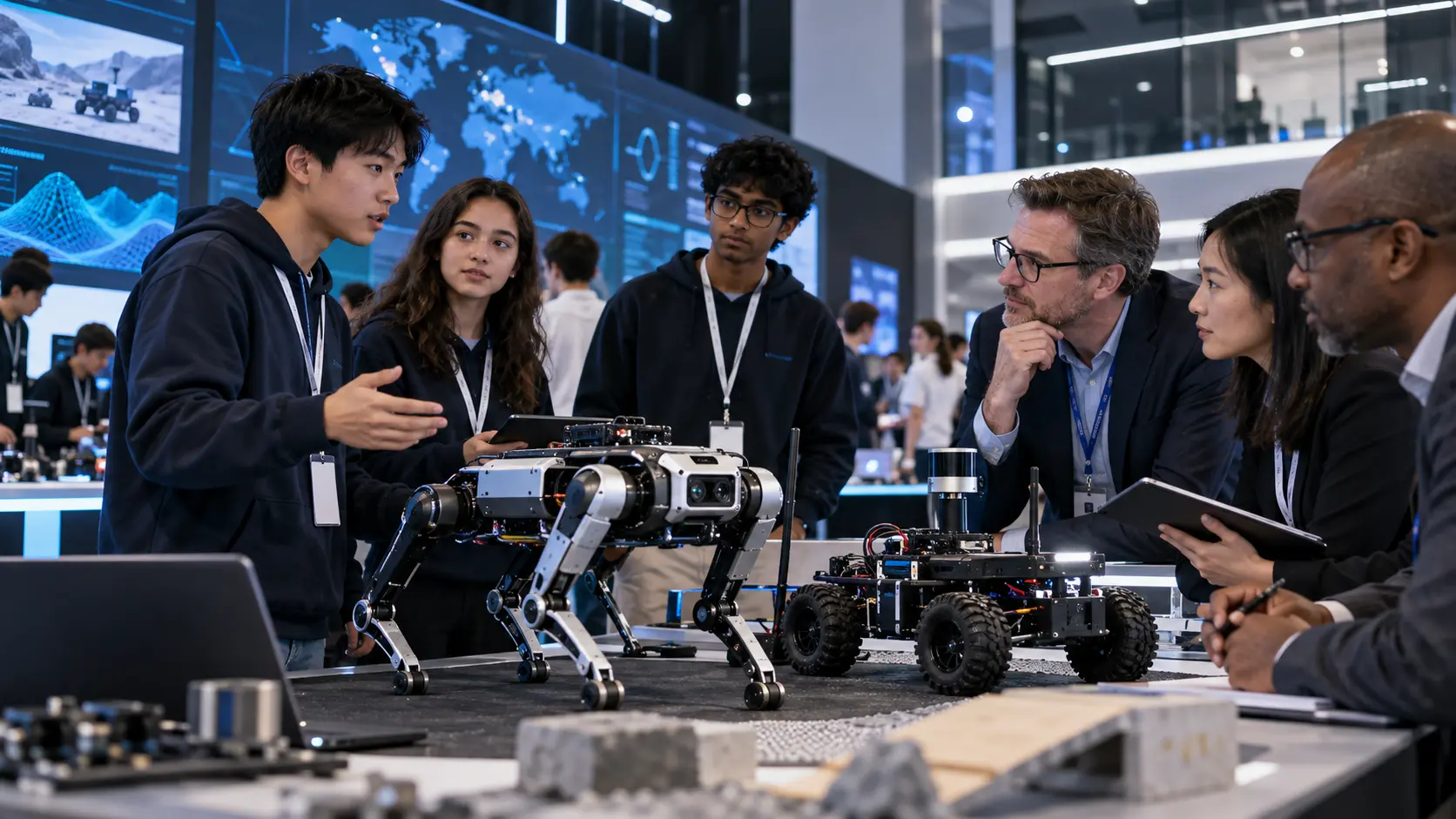
Quality of context, user understanding, evidence, requirements and recognition of uncertainty.
02
Architecture, appropriate use of AI or robotics, integration, functionality and clarity of technical explanation.
03
Verification, failure analysis, safety, privacy, fairness, accessibility and human oversight.
04
Role ownership, iteration, documentation, presentation quality and ability to answer questions honestly.
09 / Challenge integrity
01
Permitted mentor support and AI tool use are declared; teams identify what students designed, built and understood.
02
Schools retain safeguarding responsibility and use approved, moderated channels for international interaction.
03
Hardware, batteries, tools, movement, radio use and demonstrations follow venue and school risk controls.
04
Published rubrics, judge guidance, conflict declarations and evidence-based scoring improve transparency.
10 / Challenge outputs
01
Research, design, code, testing, reflection and technical presentations provide durable evidence of learning.
02
Briefings, shared resources and post-event review connect educators interested in sustained AI and robotics learning.
03
Approved summaries show how the same global issue generates different locally grounded solutions.
04
Strong teams may progress to research mentoring, advanced studios or future international projects, subject to programme criteria.
Build the next programme
We can shape a class project, school pilot, international team or multi-school pathway around your learners.