01
Student learning
Joint projects develop AI literacy, engineering, research, language, communication and global citizenship through tangible outputs.

Institutional partnerships for AI & robotics education
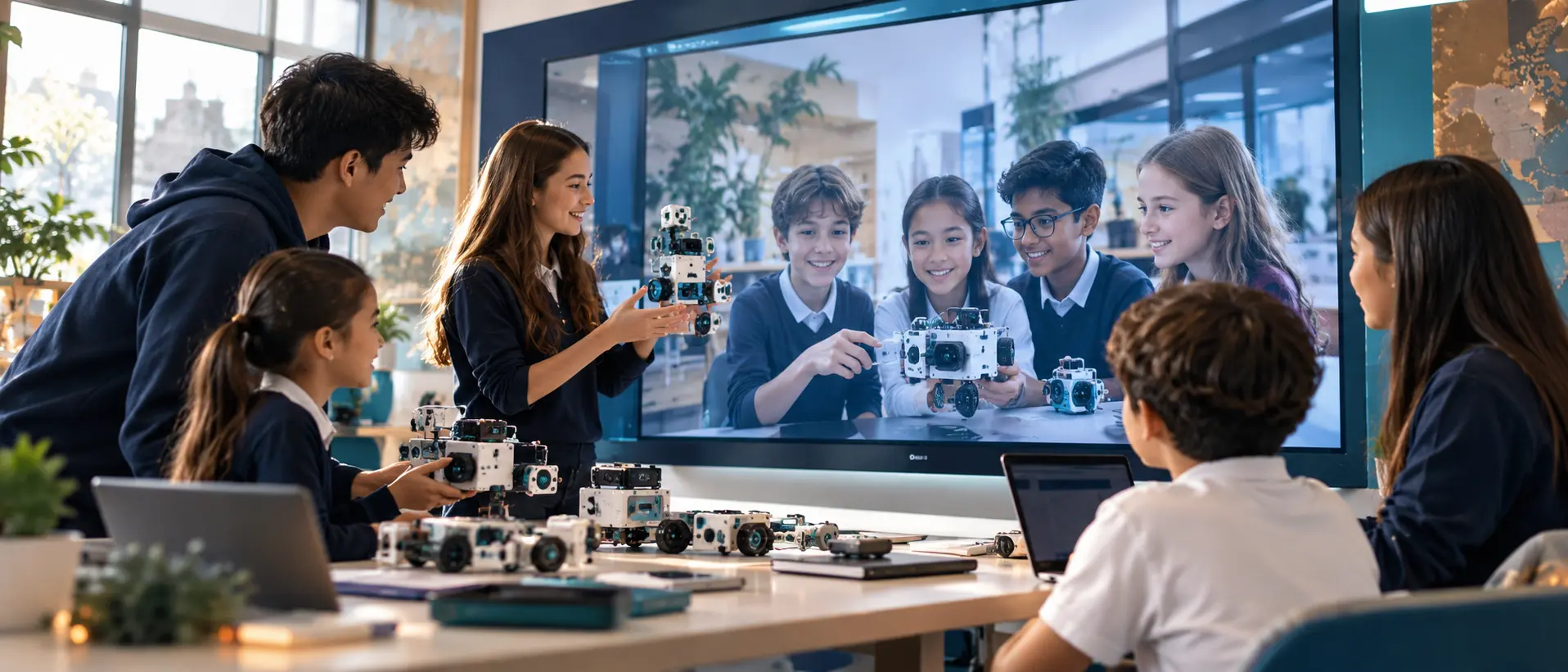
CIRC helps schools establish purposeful international connections centred on AI, robotics, research and global learning. The model prioritises educational fit, safeguarding, staff ownership and realistic delivery. A connection can begin with one structured activity and develop into curriculum projects, student teams, teacher exchange or a long-term innovation partnership.
Partner readiness
Safeguarded exchange
Joint curriculum projects
Long-term school partnerships
01 / Partnership purpose
01
Joint projects develop AI literacy, engineering, research, language, communication and global citizenship through tangible outputs.
02
Educators share curriculum approaches, observe practice, co-design resources and build confidence in responsible technology education.
03
Leaders compare strategy, infrastructure, inclusion, assessment and implementation without assuming direct transfer between systems.
04
A well-governed partnership can support recurring projects, exchanges, challenges, research and staff development.
02 / School matching
Educational fit
Schools clarify learner ages, subjects, desired outcomes, academic calendars and the place of the project in curriculum or enrichment.
Operational fit
Planning compares time zones, available meeting windows, devices, platforms, language support and staff coordination capacity.
Values fit
Partners align on student welfare, privacy, inclusion, AI use, media permissions and expectations for respectful collaboration.
Commitment fit
A short pilot with named owners and defined outputs is preferred to an ambitious agreement without delivery capacity.
03 / Entry model
A low-risk first collaboration allows two classes to introduce their school context, complete a common practical activity and compare results through teacher-mediated exchange.
01
Both schools investigate the same age-appropriate AI, coding, data or robotics concept using accessible materials.
02
Students produce diagrams, short explanations, test results or prototype recordings approved by their school.
03
Each class prepares questions about design choices, school context and learning rather than exchanging personal information.
04
Teachers assess participation, technical understanding and operational fit before deciding whether to deepen the partnership.
04 / Curriculum partnership
Partner schools teach aligned project units locally while sharing selected milestones and a common final event. This model offers international value without requiring continuous mixed-team work.
01
Teachers align learning outcomes, core requirements, evidence, vocabulary and responsible-use expectations.
02
Each school adapts schedule, pedagogy, equipment and examples while preserving the comparable core.
03
Students share research questions, design reviews and test findings through approved formats.
04
The final event compares solutions, highlights context and includes moderated student questions and reflection.
05 / Advanced partnership
Schools ready for deeper collaboration create mixed international teams with shared ownership of one research, software or robotics outcome.
01
Students complete safeguarding, platform, communication, technical and intercultural preparation before project work.
02
Responsibilities and interfaces allow local sub-teams to contribute meaningfully while maintaining one joint plan.
03
Named staff monitor participation, resolve operational issues and protect student ownership of the technical work.
04
The final portfolio makes individual, local-school and international contributions visible.
06 / Teacher connection
International school connection is stronger when teachers collaborate as professionals, not only as organisers of student calls.
01
Teachers share curriculum models, classroom management, assessment approaches and barriers to AI and robotics implementation.
02
A small working group develops the brief, resources, technical setup, inclusion adaptations and assessment plan.
03
Partners may observe approved lesson excerpts or examine anonymised learner work to evaluate and improve teaching design.
04
The partnership produces reusable plans, rubrics, glossaries, technical guides and reflection for future cohorts.
07 / Leadership and research connection
01
School leaders examine strategy, staffing, infrastructure, inclusion, risk and sustainable investment.
02
Partners investigate a shared implementation question using an agreed, proportionate method and locally interpreted evidence.
03
Where appropriate, a research partner may advise on method, ethics or dissemination without overstating institutional endorsement.
04
A successful bilateral partnership can support additional schools, challenge events or funding proposals through explicit governance.
08 / UK–China partnership example
This is a prospective model, not a claim of an existing named partnership. It shows how schools could begin with a carefully governed project and build towards a durable AI and robotics relationship.
Term 1
Schools compare objectives, calendars, curriculum, platforms, data requirements, language support and safeguarding arrangements.
Term 2
Students investigate local school environments using a shared framework and exchange approved evidence and design reviews.
Term 3
Classes present findings bilingually, compare context and decide whether mixed teams or teacher collaboration should follow.
Year 2
Options include advanced student teams, teacher co-development, research enquiry or an annual international challenge.
09 / Safeguarding and governance
01
Each school appoints programme and safeguarding leads with clear escalation, attendance and supervision arrangements.
02
Student interaction occurs through institutionally approved, moderated channels; private contact is not required.
03
Partners agree identity, images, recordings, work sharing, personal data, retention and deletion before activities begin.
04
Scope, roles, costs, intellectual property, conduct, cancellation, risk and review points are documented proportionately.
10 / Partnership lifecycle
01
Clarify purpose, capacity, fit and non-negotiable safeguarding or operational requirements.
02
Agree one achievable activity, named owners, common evidence, schedule, platforms and success indicators.
03
Monitor participation, learning, communication and workload; record issues and improvements honestly.
04
Scale only where evidence and commitment support it; otherwise close the pilot well and preserve useful learning.
11 / Partnership outputs
01
Joint prototypes, research, presentations, technical portfolios and reflection on intercultural collaboration.
02
Co-designed units, shared assessment, professional reflection and increased delivery confidence.
03
A reviewed partnership plan, leadership insight, case study and informed decision about future scope.
04
Potential annual projects, challenge participation, research opportunities and additional school connections.
Build the next programme
We can shape a class project, school pilot, international team or multi-school pathway around your learners.