01
Form the team
Teachers use strengths, interests and access needs to build balanced teams and assign an initial mission charter.
Collaboration by design
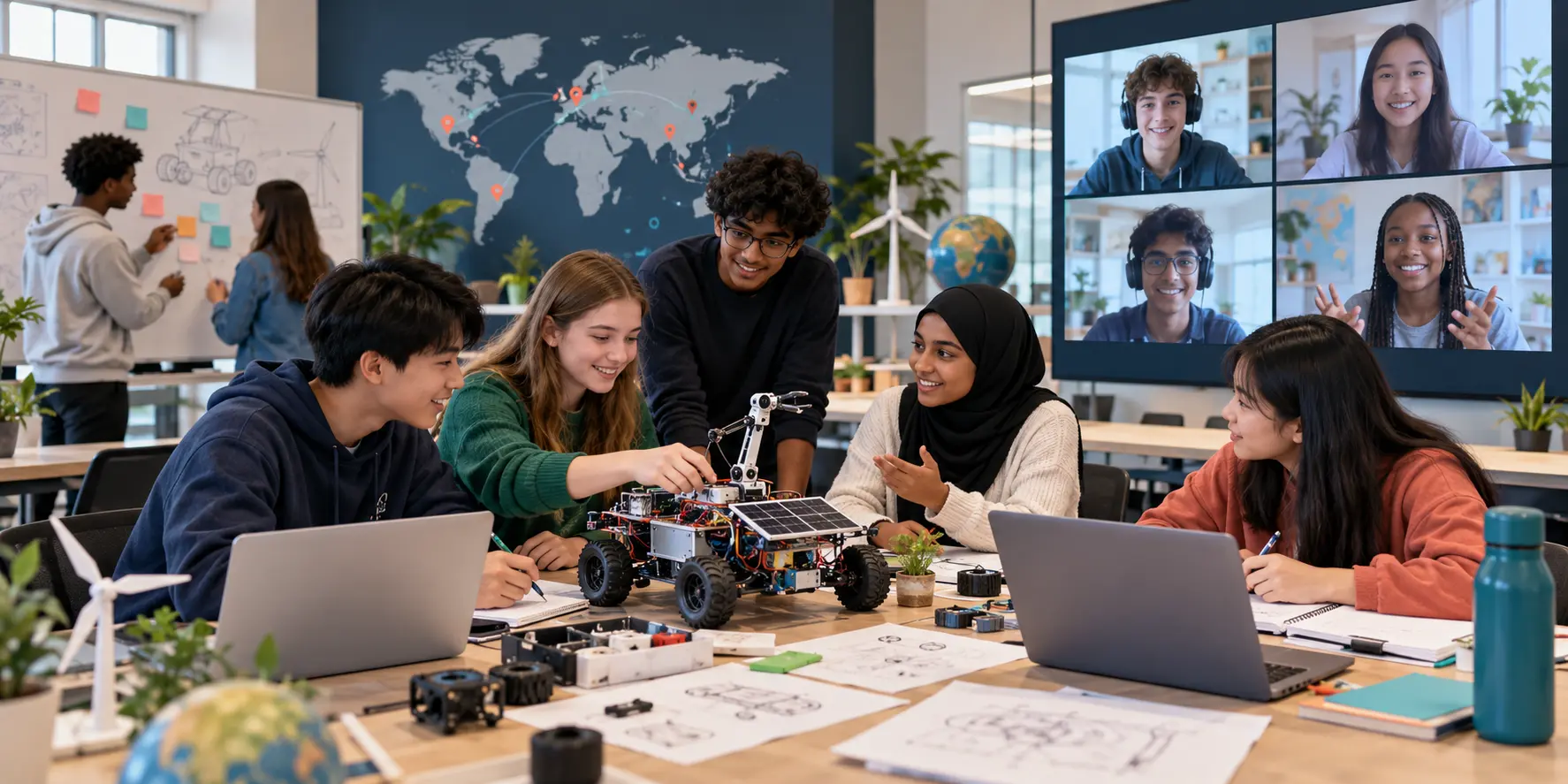
CIRC projects make collaboration explicit. Students learn how to organise technical work, resolve uncertainty, communicate across disciplines and remain individually accountable.
Defined roles
Agile routines
Peer feedback
Individual accountability
CIRC team model
01
Teachers use strengths, interests and access needs to build balanced teams and assign an initial mission charter.
02
Short stand-ups, visible task boards, design reviews and test evidence keep progress transparent.
03
Retrospectives, peer critique and role rotation help students name what effective collaboration looks like.
Transferable capabilities
01
Students explain complex choices to technical and non-technical audiences using evidence, diagrams and demonstrations.
02
Learners manage dependencies, negotiate trade-offs and decide when to ask for specialist support.
03
Multiple valued roles ensure that coding confidence is not the only route to meaningful participation.
Build the next programme
We can shape a class project, school pilot, international team or multi-school pathway around your learners.